
Understanding Lumps and Bumps in Cats
One moment you’re enjoying a quiet cuddle with your cat, and the next, you feel something unusual.
A small bump. A firm lump. Something that definitely wasn’t there before.
You pause. You worry. Then you tell yourself you’ll keep an eye on it.
At The Cat Doctors, we hear this story all the time. But while it’s completely understandable, waiting to see what happens isn’t always the best option for cats.
Here’s why we recommend having any new lump or bump checked as soon as it’s discovered.
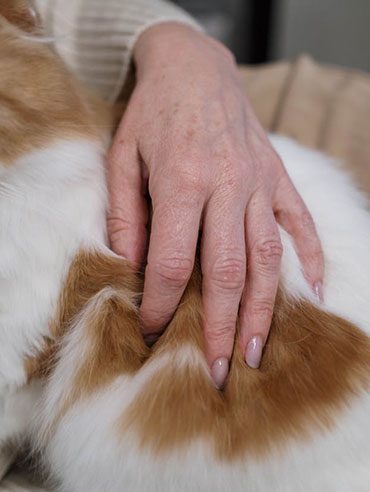
What are lumps and bumps in cats?
Lumps and bumps, formally called masses, are areas of abnormal tissue that form on, under, or within your cat’s skin. Masses may appear suddenly or grow slowly over time, and while some are easy to spot, others can only be found during petting or brushing.
Characteristics of masses can vary, but may include:
- Soft and movable or firm and fixed
- Small and subtle or large and obvious
- A single lump or several in multiple locations
- Irritating to the cat or completely unnoticed
Note that the word “mass” only means that abnormal tissue has developed, and not whether it is harmless (benign) or cancerous (malignant).
Common types of lumps and bumps in cats
Cats can develop a range of masses for various reasons. Common masses include:
- Lipomas or fatty masses — These are less common in cats than in dogs, but can still occur.
- Cysts — Cysts are fluid-filled pockets that may change in size.
- Abscesses — Often caused by bite wounds, these pockets of infection are especially common in cats that spend time outdoors.
- Inflammatory swellings — This includes enlarged lymph nodes, which can feel like lumps under the jaw, on the chest, or behind your cat’s knees.
- Skin growths, warts, or tumors — Skin growths can vary in shape, appearance, and behavior.
Some masses in cats can occur at prior injection sites, which is why we carefully monitor and track vaccination locations. Cats can also develop mammary (breast) masses, particularly along the abdomen or chest. If you notice a change at any of these locations, schedule an appointment immediately.
While it’s helpful to recognize mass types and locations, only diagnostic testing can tell us what’s causing a mass and whether it is harmless or a cause for concern.
Why “wait and see” can be risky for cats
Cats are masters at hiding illness, often causing changes to go unnoticed until they’re more advanced. When it comes to lumps and bumps, early evaluation gives your veterinarian more treatment and care options.
Here’s a look at what happens when your cat has a mass.
Getting a diagnosis
If the mass is easily accessible, the veterinarian will collect a sample of cells using a needle or by gently scraping the skin. These samples can then be evaluated in-house or sent to a laboratory to determine whether the mass is inflammatory, infectious, or cancerous.
Measuring and monitoring
Even if your cat’s mass is benign (non-cancerous), careful monitoring helps us track changes over time. We’ll carefully document the mass’s size and location to aid in diagnosis, treatment planning, and long-term monitoring.
Next steps
In many cases, mass removal is recommended. Reasons for removal include:
- Cancer is confirmed or suspected
- Location of the mass affects comfort, movement, or grooming
- Sample testing is unclear (inconclusive)
- Mass is repeatedly irritated or infected
- Peace of mind and proactive care (i.e., just in case)
- Removal and recovery are easier when performed early
What to expect if your cat needs a mass removal
Depending on the nature of your cat’s mass and their overall health, mass removal may be a brief outpatient procedure or a more involved surgery. In any case, your cat’s comfort and safety are our top priority.If your cat needs a mass removal, you can expect a smooth and compassionate process that includes:
- Pain management — Your cat will stay comfortable before, during, and after their procedure.
- Clear aftercare instructions — We’ll ease your worries by explaining what to do and how to monitor your cat’s incision.
- Follow up — We’ll check in after the procedure and provide clear next steps, especially if further testing, surgery, or treatments are recommended. If your cat’s mass is something serious, we’ll make sure you understand what’s happening and any recommendations for additional treatment.
No waiting: When in doubt, get it checked out
Many lumps in cats are benign, but some are not. The only way to know the difference is through timely veterinary care. Whether it’s a tiny bump, a small itchy swelling, or a firm lump, it’s always worth a trip to The Cat Doctors for a full exam.
If you’ve noticed a new lump or change in your cat’s skin or appearance, don’t wait—request an appointment online or contact our team.